
About All Tours From La Fortuna ToursWaterfall ToursSloth Sanctuary ToursTubing ToursTenorio Volcano Tours Directions Hours & Fees
Find Tours 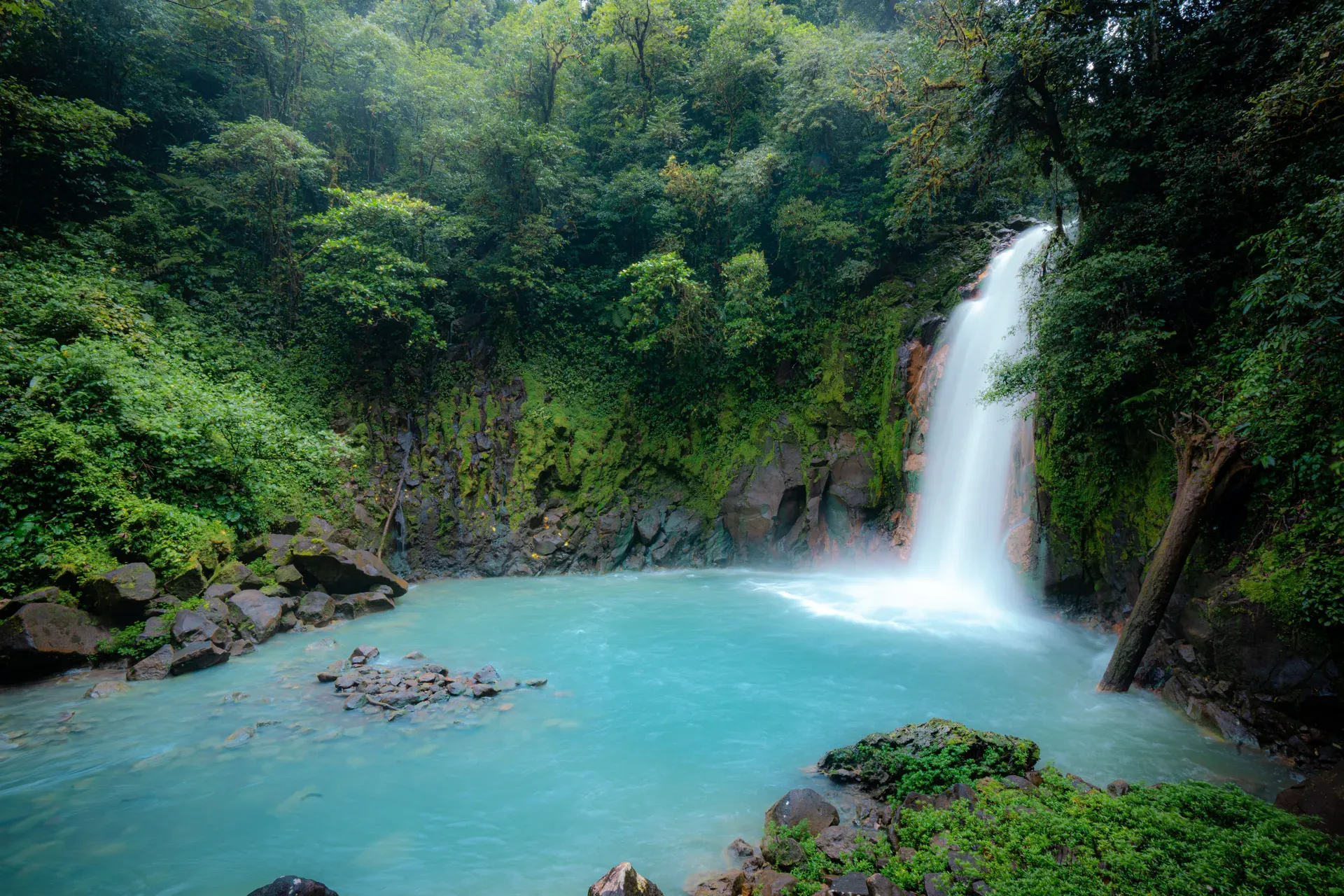
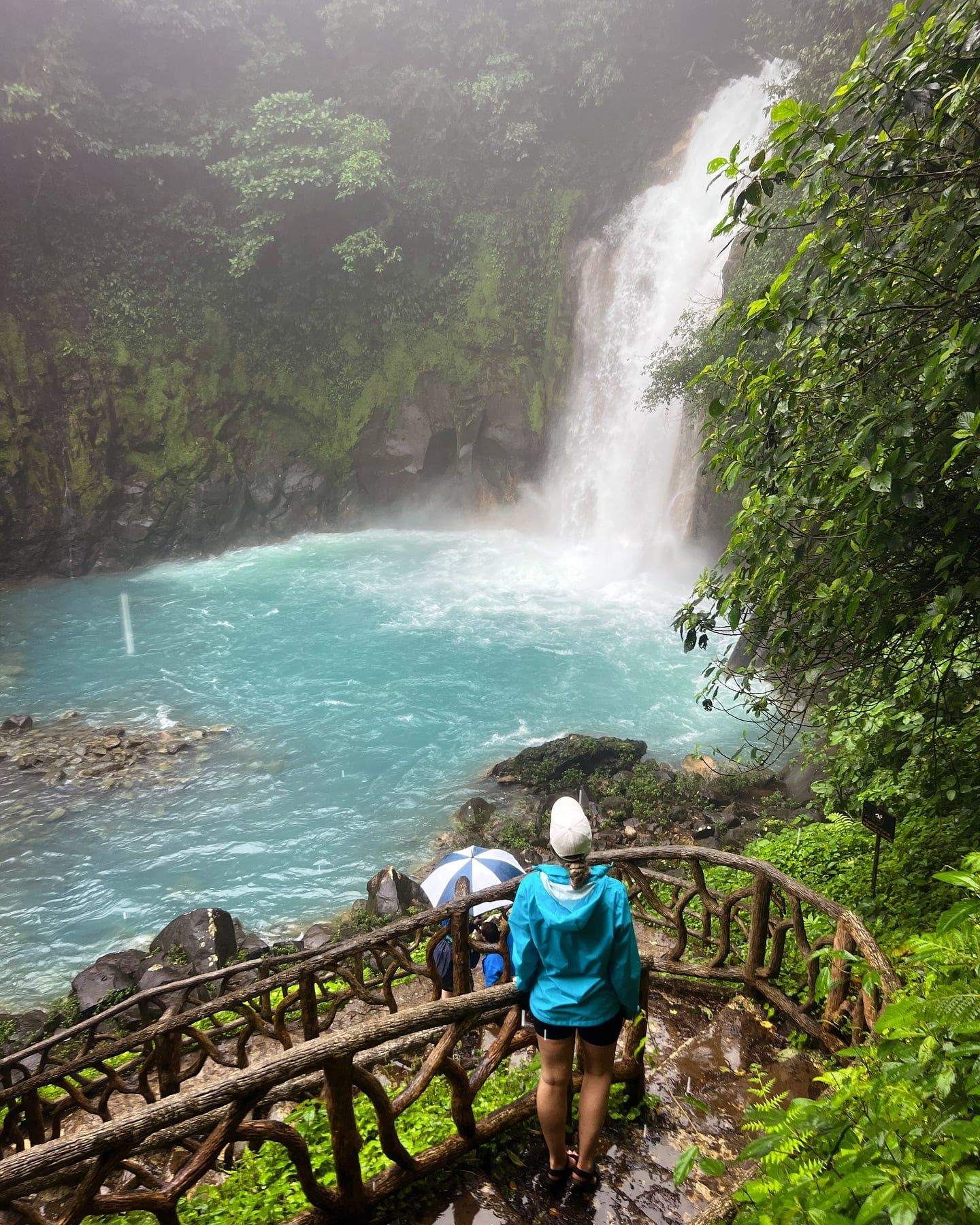
Located 90 minutes from La Fortuna in Tenorio Volcano National Park, this 14-kilometer river is famous for an optical phenomenon that turns its water a bright turquoise. Visitors can hike the 3.7-mile main trail and descend 250 steps to photograph the 98-foot waterfall plunging into the jungle.
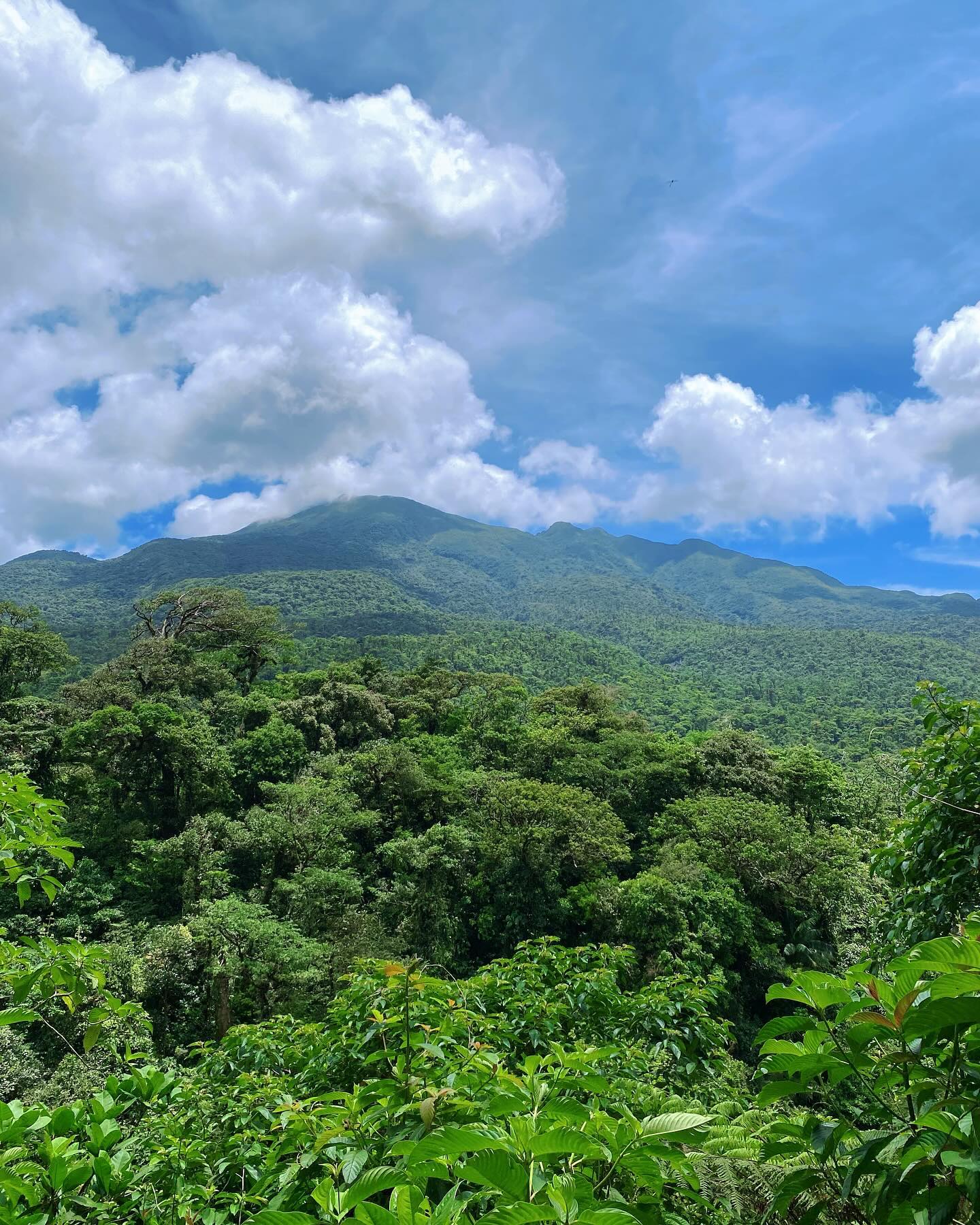
Find Guided ToursRio Celeste is a 14-kilometer light blue river and a 98-foot waterfall located in the northern lowlands of Costa Rica. Situated deep within the Tenorio Volcano National Park at the crossroads of the Guanacaste and Alajuela provinces, the river sits at a latitude of 10.65°N and longitude of -84.98°W. The surrounding rainforest protects a high density of flora and fauna, including poison dart frogs, monkeys, toucans, and the endangered Baird's tapir.
Long before modern researchers studied the area, the indigenous Maleku and Corobicí peoples inhabited the Guatuso plains and considered these waters sacred. The Maleku revered the river and its volcanic streams as their spiritual 'big house' ruled by gods. Today, the national park boundaries serve to protect both this deep cultural history and the active geothermal forces of the Tenorio Volcanic Complex, which heat nearby bubbling waters to temperatures of 95°C (203°F).
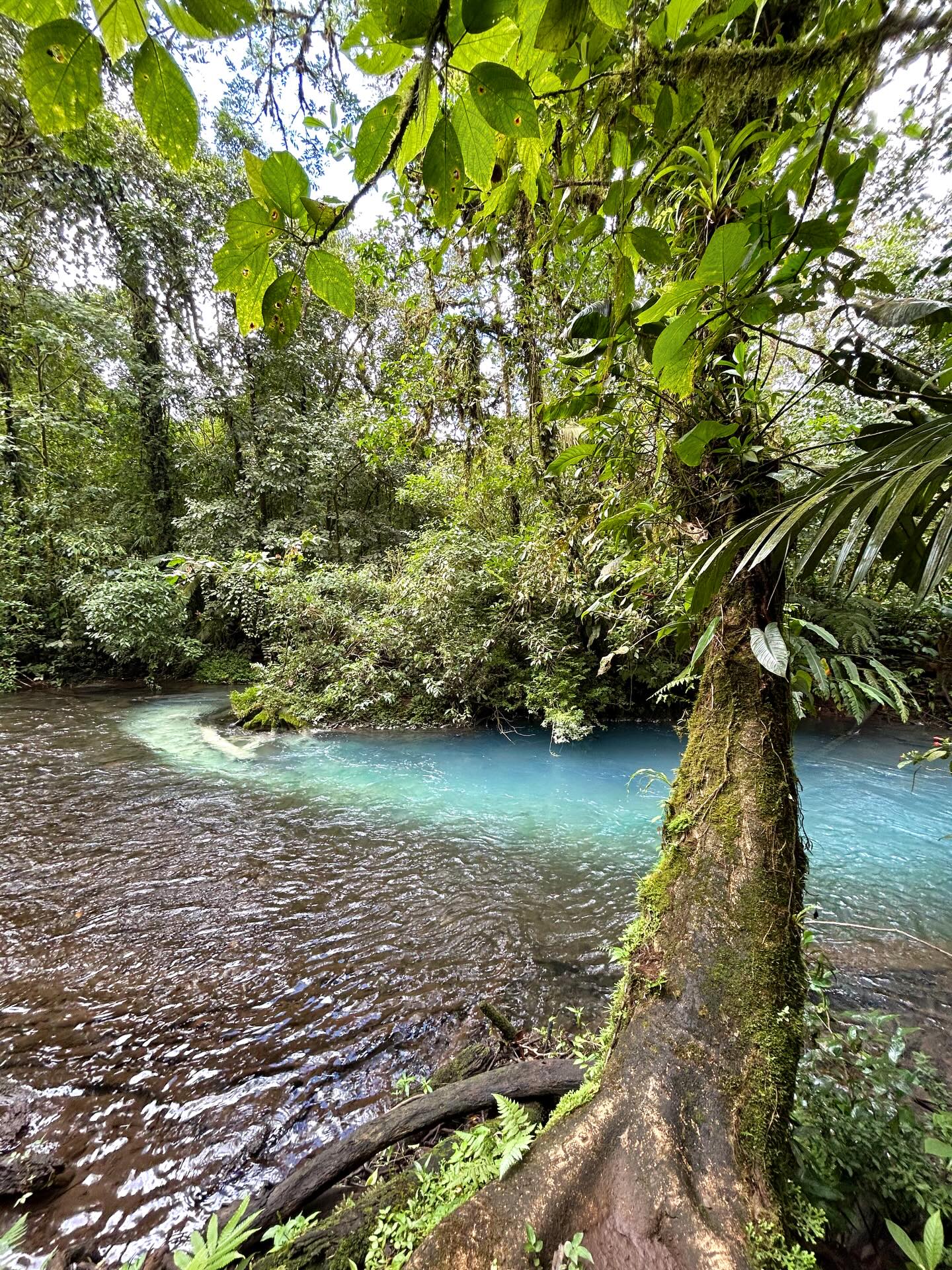
The river's signature sky-blue color begins at a point called Los Teñideros. Here, the clear waters of the Buenavista River and Sour Creek (Quebrada Agria) converge. Visitors standing at this junction can observe the exact line where the optical transformation occurs.
While local myths once attributed the color to chemical reactions, studies by researchers from the Universidad de Costa Rica and the Universidad Nacional proved otherwise. The hue is an optical phenomenon known as Mie scattering. When the two rivers mix, suspended minerals containing aluminum, silicon, and oxygen reflect sunlight, creating the illusion of bright turquoise water.
Discover the full history and cultural significance on our About page.
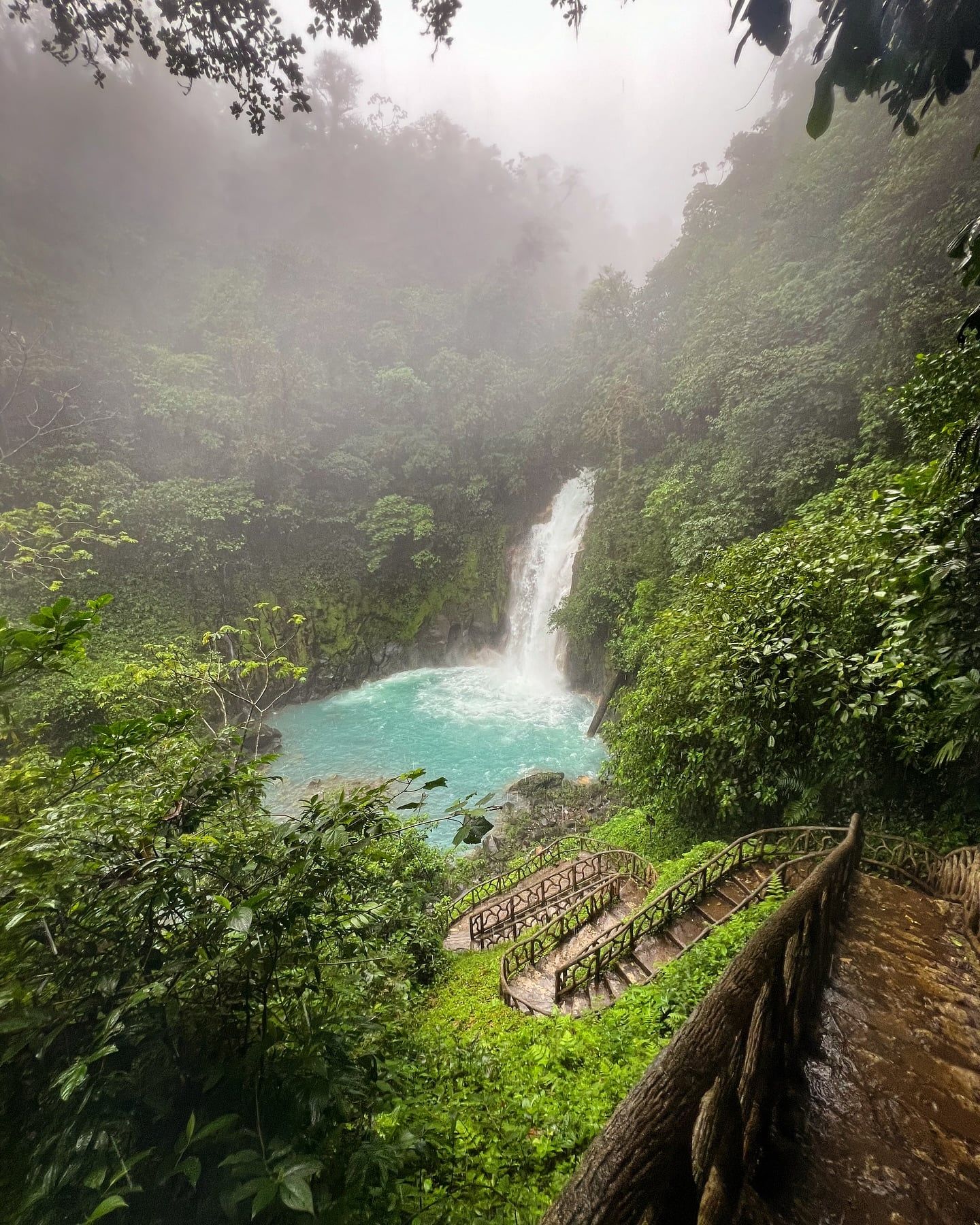
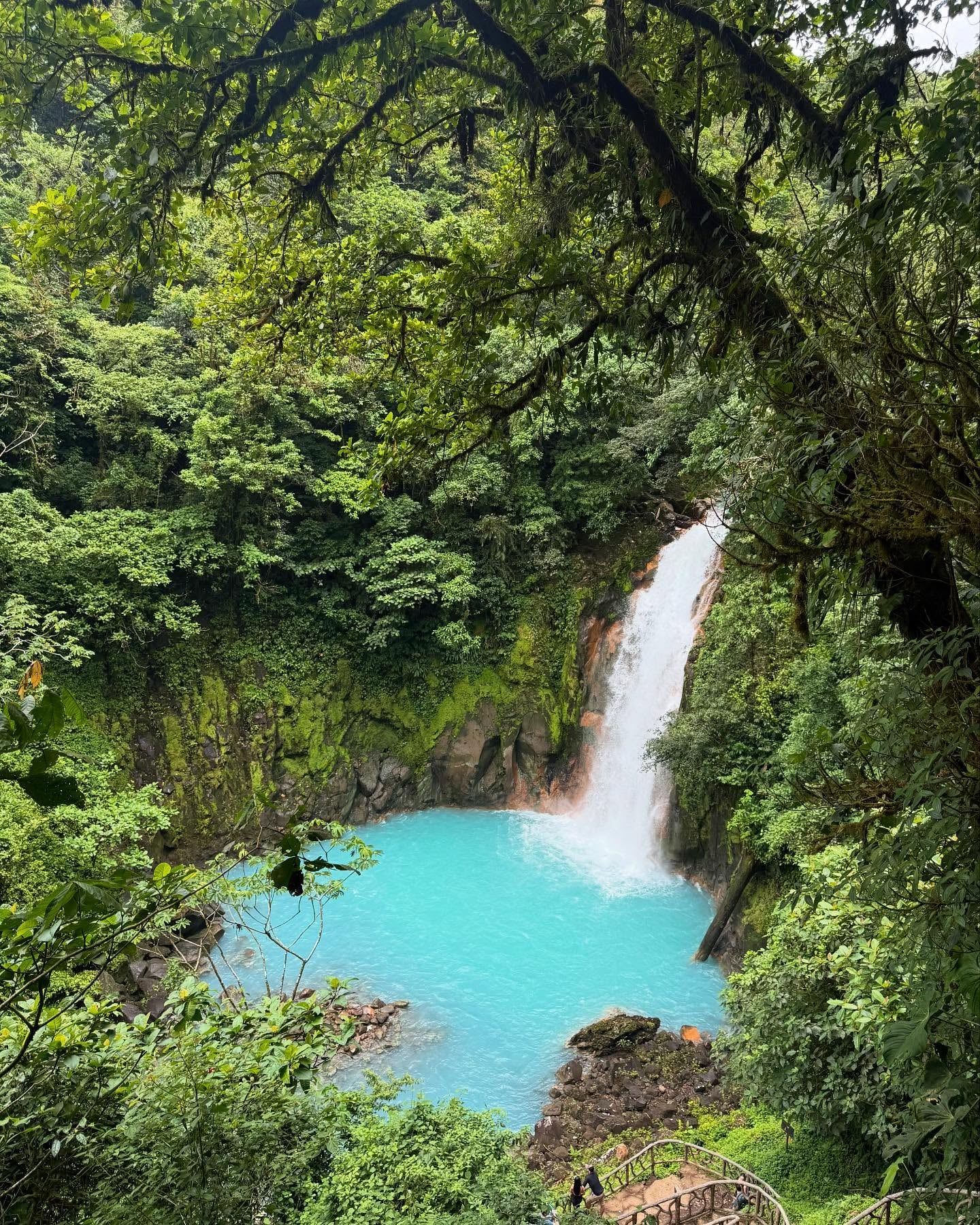
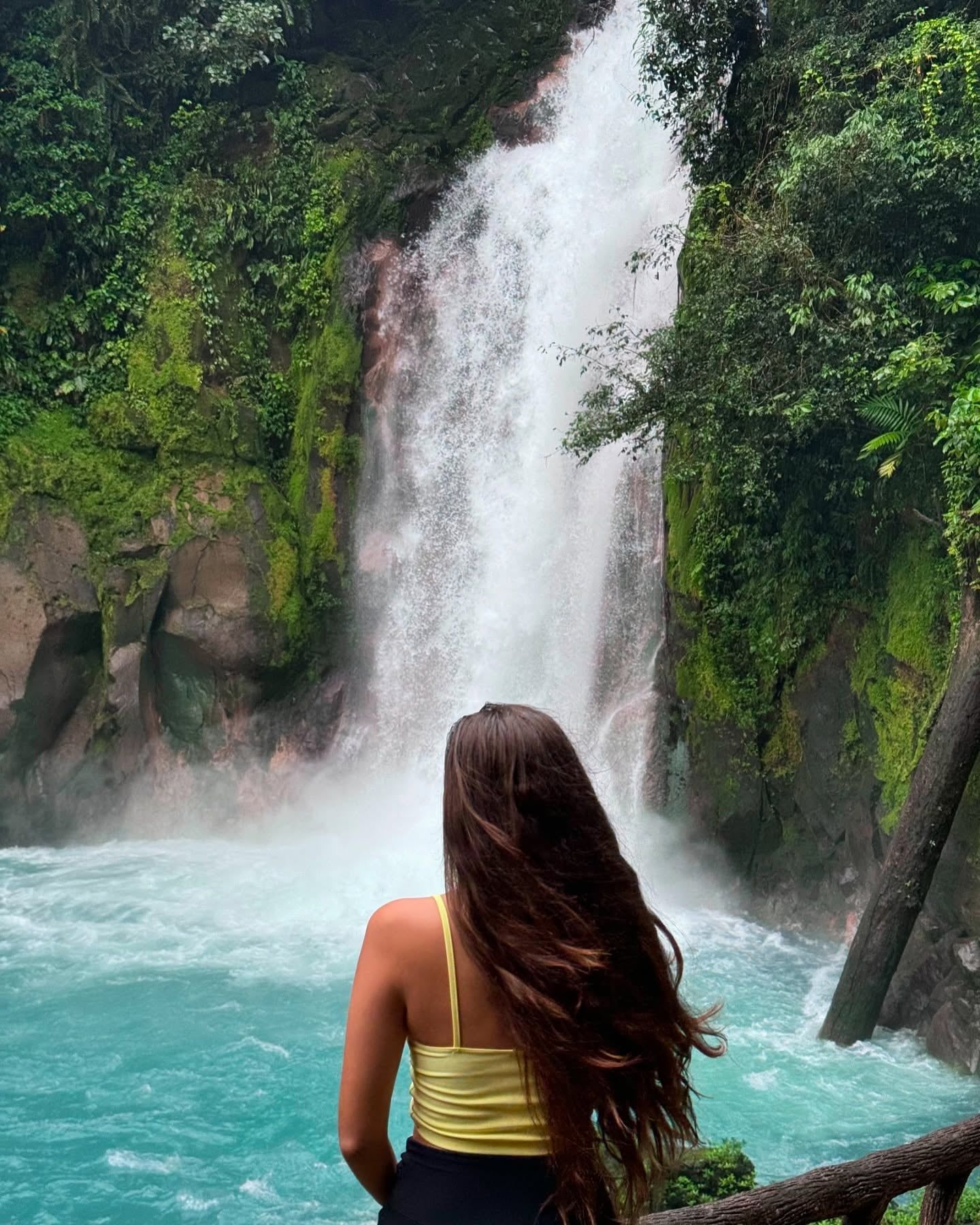
A steep descent down 250 well-maintained stairs leads to a viewing platform facing a 98-foot waterfall. The water plunges directly into a bright turquoise pool surrounded by dense tropical jungle. Due to storm damage, the bottom platform remains closed, but the upper vantage points provide excellent photographic opportunities.
At a point called Los Teñideros, the Buenavista River and Sour Creek merge to form Rio Celeste. Here, you can stand and watch the exact line where suspended minerals reflect sunlight through Mie scattering, instantly turning the clear water into a brilliant sky-blue stream right before your eyes.
Active geothermal forces from the Tenorio Volcano heat specific sections of the river, creating vigorously bubbling pools known as Los Borbollones. Reaching temperatures up to 95°C (203°F), the water boils like a saucepan and releases a strong sulfur smell. Visitors must strictly stay behind safety barriers to prevent burns.
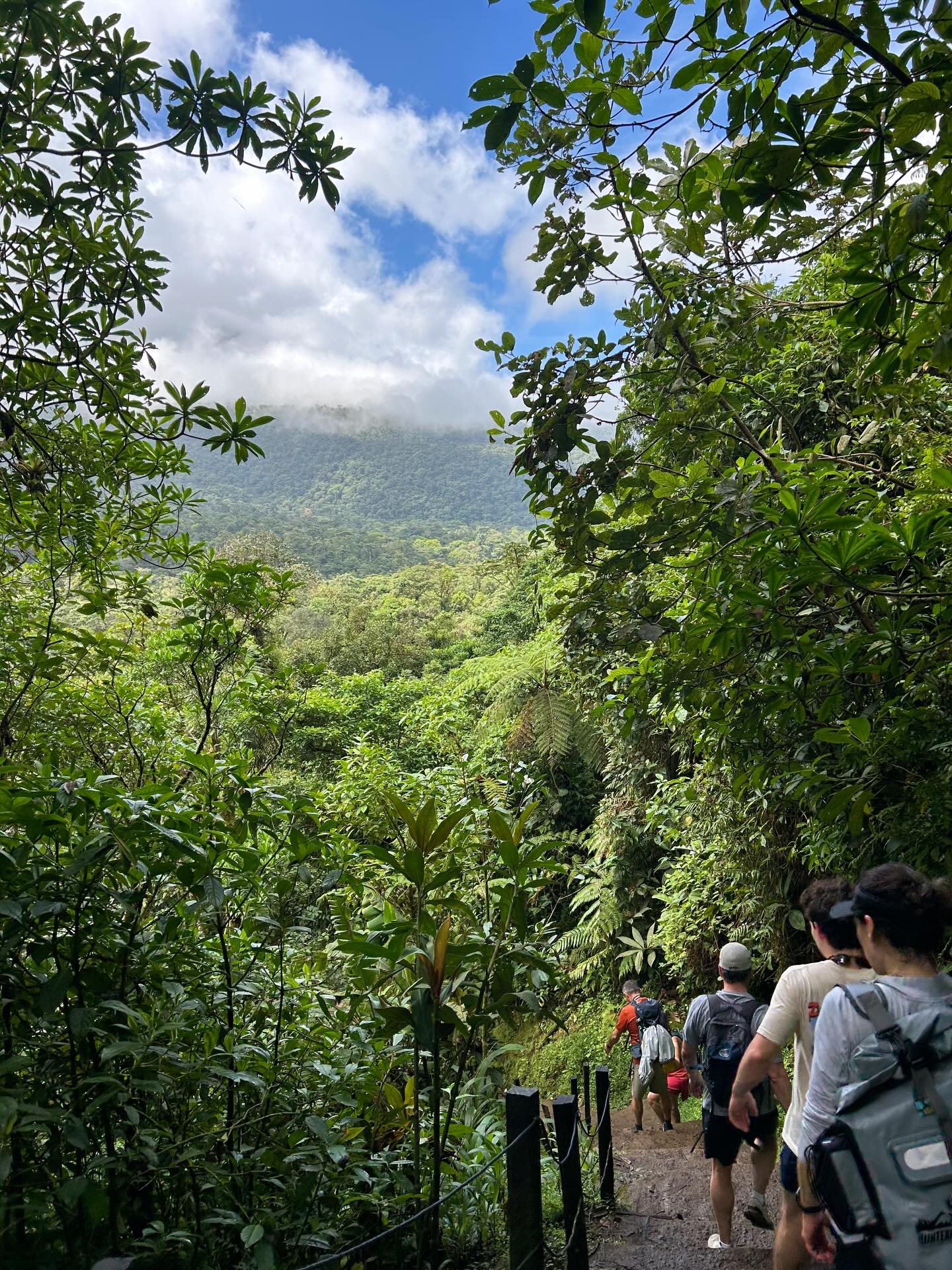
The 3.7-mile main hiking trail cuts through a dense rainforest corridor, protecting a high density of Costa Rican biodiversity. While walking the rugged paths, hikers frequently observe colorful poison dart frogs, toucans, and monkeys. Lucky visitors might even catch a glimpse of the rare, endangered Baird's tapir.
Hand-picked tours with free cancellation and verified reviews
 Free Cancellation 12h
  Free Cancellation 11h
  Free Cancellation 8h
  Free Cancellation 8h
  Free Cancellation
  Free Cancellation 2h
  Free Cancellation 2h
  Free Cancellation 8h
 The optimal time to visit Rio Celeste is during the dry season from January to April. Lower rainfall during these months minimizes trail mud and prevents sediment runoff from altering the water's color.
March and April provide optimal dry season conditions with clear water and dry trails. May introduces unpredictable highland weather, increasing the risk of rain and muddy hiking paths.
Falling outside the recommended dry season, these months bring unpredictable weather to the volcanic highlands. Sudden downpours can create slippery mud and alter the river's blue color.
October and November are the worst times to visit. Heavy seasonal rains cause significant sediment runoff, turning the water muddy brown and making the trails extremely difficult to navigate.
January and February are prime dry season months. Minimal rainfall reduces mud on the 3.7-mile trail and prevents sediment runoff, ensuring the river displays its signature blue optical phenomenon.
Tenorio Volcano National Park is open daily from 8:00 AM to 4:00 PM. Park rangers strictly enforce a last entry time of 2:00 PM, and all visitors must exit the trails by 4:00 PM.
| Category | Price |
|---|---|
| Adult (Non-resident) | $12 USD plus tax |
| Child (Non-resident, ages 2-12) | $5 USD plus tax |
| Adult (Costa Rican citizen/resident) | 800 colones |
| Child (Costa Rican citizen/resident, ages 2-12) | 500 colones |
No walk-up tickets are sold at the gate. All visitors must purchase park entry permits in advance through the official SINAC online reservation system and select a specific 40-minute entry window. Online booking slots run until 1:45 PM.
For complete schedules and ticket prices, visit our Hours & Fees page.
Rio Celeste is located deep within Tenorio Volcano National Park in Costa Rica's northern lowlands. Visitors must travel by car or private shuttle since the remote location lacks direct public transit access.
📍 Tenorio Volcano National Park, Guanacaste and Alajuela Provinces, Costa Rica (Lat: 10.65°N, Long: -84.98°W)
Driving from La Fortuna takes travelers east on Route 142 before turning onto Route 4 toward Bijagua. Clear signs then direct drivers to the park entrance. The 75-kilometer route is entirely paved, meaning a 4x4 vehicle is not strictly required. However, a high-clearance SUV is recommended for regional gravel roads. Drivers should download offline maps beforehand due to weak cellular reception.
Public buses do not run directly to the park entrance, making private shuttles a highly reliable alternative. Companies like Native's Way operate clean, air-conditioned vans equipped with English-speaking drivers. These services transport visitors directly from hotels in La Fortuna or from the Liberia Airport. Booking this option allows travelers to avoid navigating unfamiliar roads while ensuring a direct route to the remote reserve.
There are no direct public bus routes that travel to the Tenorio Volcano National Park entrance. Travelers attempting to use public transit will find themselves unable to reach the trailhead without arranging secondary transportation. Because of this logistical limitation, tourists must rely entirely on rental cars or private shuttle operators to complete the trip from regional hubs like Liberia or La Fortuna.
For detailed transport options and routes, visit our Directions page.
Park officials do not sell walk-up tickets at the entrance. Visitors must create an account and purchase entry permits through the official SINAC website in advance. You will need to select a specific 40-minute entry window. Book early, as the online system can be slow and peak dry season slots sell out quickly.
Park rangers strictly enforce a footwear mandate and will turn away anyone wearing sandals or flip-flops. You must wear sturdy hiking boots or trail runners with excellent grip. This rule prevents injuries on unpaved trail sections that frequently turn into slippery mud baths with exposed rocks and roots.
Rangers conduct mandatory bag checks at the gate and will confiscate prohibited items. Single-use plastic bottles, cheap plastic ponchos, drones, food, and knives are strictly banned inside the national park. Bring a durable, reusable bottle filled with water before arriving. There are no drinking water stations along the 3.7-mile trail.
Cell phone reception is extremely weak or completely non-existent near the national park entrance. This is particularly true with providers like Kolbi. Download your route on Google Maps or Waze for offline use before leaving your hotel in La Fortuna or Liberia. Doing so ensures you can confidently navigate the 75-kilometer drive without a signal.
Heavy rainfall causes significant sediment runoff. This runoff can quickly turn the famous blue river a muddy brown, especially during October and November. Before making the drive, check the official Tenorio Volcano National Park Facebook page for real-time water conditions. Visiting during the dry season from January to April offers the highest probability of clear water.
Local attendants monitor the parking lots near the trailhead for a fee of 2,000 to 3,000 colones. However, they do not accept liability for theft, and thieves occasionally target rental cars. Never leave luggage or electronics visible in your vehicle. Carry your passport, wallet, and expensive gear with you on the hike.
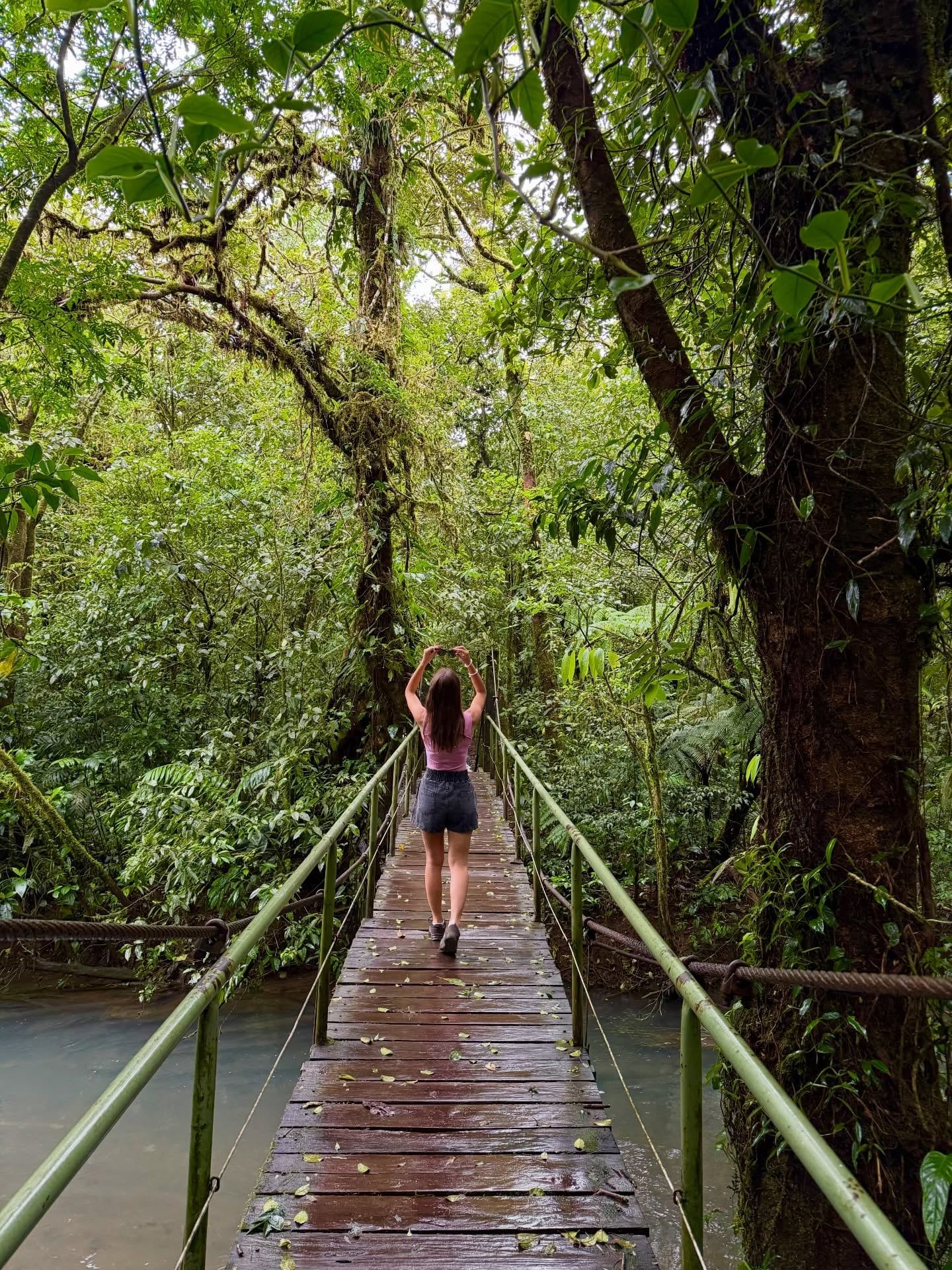
This quiet reserve features three impressive suspension bridges suspended in the rainforest canopy. It sees far fewer tourists than similar sites in La Fortuna, allowing for a peaceful 2.5-kilometer hike to spot unique birds and flora.
This private reserve focuses entirely on protecting the habitat of the endangered Baird's tapir. Guided tours allow visitors to safely observe these elusive mammals while learning about local conservation efforts in an undisturbed jungle environment.
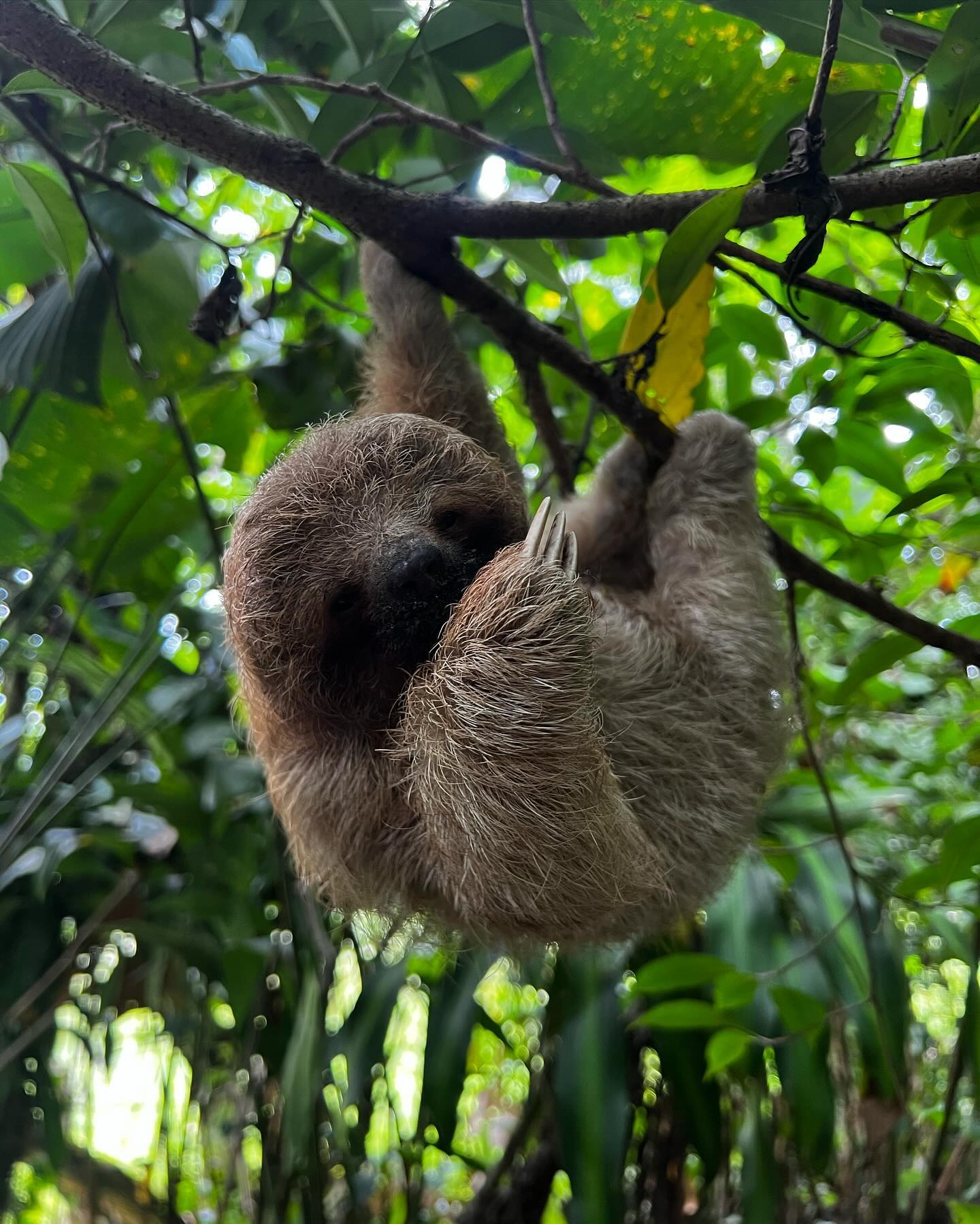
Located in Bijagua, this organic farm and butterfly garden highlights local sustainable agriculture. It provides an excellent opportunity to observe sloths up close, explore medicinal plant gardens, and photograph frogs in their natural habitats.
Read what travelers share about their experience visiting Rio Celeste — from practical tips to personal highlights.
Non-residents pay $12 USD per adult and $5 USD per child (ages 2-12), while Costa Rican citizens and residents pay 800 colones per adult and 500 colones per child. You must purchase tickets in advance through the official SINAC website and select a specific 40-minute entry window. Walk-up tickets are not sold at the park.
The park operates daily from 8:00 AM to 4:00 PM. The last permitted entry is strictly enforced at 2:00 PM, with online booking slots running until 1:45 PM. All visitors must exit the trails by 4:00 PM.
A 4x4 vehicle is not strictly required to reach the park from La Fortuna, which is approximately 75 kilometers away. The main route via Route 142 and Route 4 to Bijagua is fully paved, taking about 90 minutes. However, a high-clearance vehicle is recommended for navigating secondary gravel roads in the surrounding region.
Park rangers conduct mandatory bag checks and will confiscate single-use plastic bottles, plastic ponchos, cigarettes, alcohol, food, knives, and drones. There are no drinking water stations along the 3.7-mile main trail, so you must pack a durable, reusable water bottle.
The main hiking trails are not wheelchair accessible due to rugged terrain, steep steps, and exposed tree roots. Seniors with mobility issues may find the 250 steep steps down to the waterfall viewing platform challenging. It is recommended that visitors with mobility constraints only hike the first 30 minutes to the viewing area at a slow pace.
Sturdy, closed-toe shoes like hiking boots or trail runners are strictly mandatory for the 3.7-mile hike. Park rangers will turn away anyone wearing sandals or flip-flops at the entrance gate. Heavy rainfall can turn unpaved sections into slippery mud, making high-traction footwear essential.
Swimming is strictly prohibited anywhere inside the boundaries of Tenorio Volcano National Park. This rule protects the fragile ecosystem and prevents visitors from suffering severe burns near the bubbling volcanic waters, which reach temperatures up to 95°C (203°F). However, you can swim legally at a free public pool located 1 kilometer past the park entrance.
The optimal time to visit is during the dry season from January to April. Less rainfall reduces trail mud and prevents heavy sediment runoff from turning the river a muddy brown color. October and November are the worst months to visit due to heavy seasonal rains that severely impact water visibility and trail conditions.
Browse verified tours with free cancellation and instant confirmation.
Find Tours