About All Tours From La Fortuna ToursWaterfall ToursSloth Sanctuary ToursTubing ToursTenorio Volcano Tours Directions Hours & Fees
Find Tours 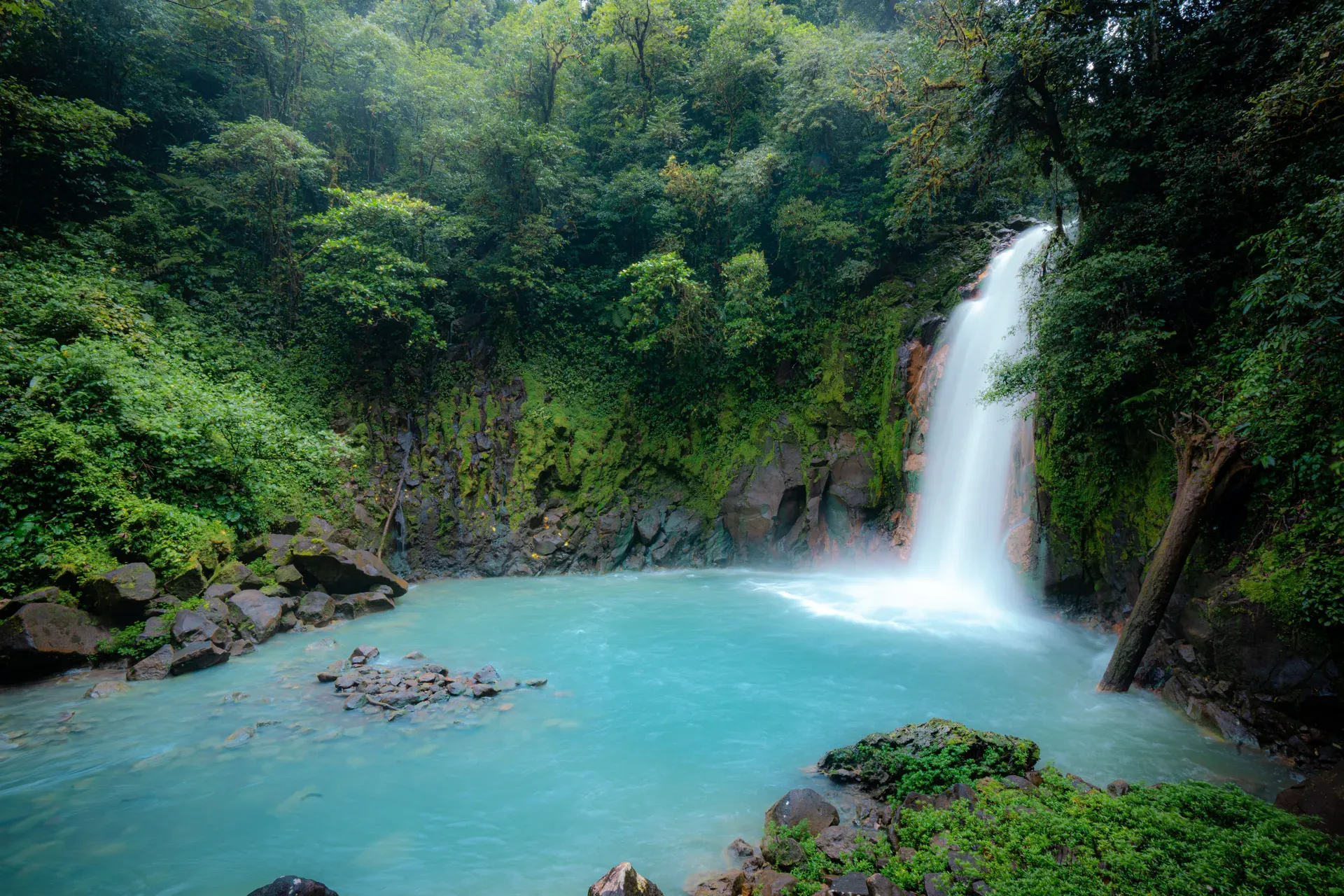
Rio Celeste cuts a bright blue 14-kilometer path through the northern lowlands of Costa Rica. The river gets its famous turquoise color from an optical phenomenon at the convergence of two clear streams inside Tenorio Volcano National Park.
Rio Celeste flows 14 kilometers through the dense rainforest of Tenorio Volcano National Park. The water appears bright turquoise due to an optical illusion called Mie scattering. Suspended minerals of aluminum, silicon, and oxygen reflect sunlight, tricking the human eye. This phenomenon begins precisely at Los Teñideros, where the clear waters of the Buenavista River and Sour Creek collide.
The river cuts through a rugged volcanic landscape in Costa Rica's northern lowlands, sitting at the border of the Guanacaste and Alajuela provinces. Dense jungle flanks the banks. Hikers walk under a thick canopy shared by poison dart frogs, toucans, and the endangered Baird's tapir. The main trail spans 3.7 miles out and back, crossing exposed tree roots and slick rocks. Humidity hangs heavy in the air. The smell of sulfur grows stronger as you approach the geothermal vents, where 95°C water bubbles up from the volcanic bedrock.
Heavy rains routinely wash sediment into the river, turning the blue water a muddy brown. October and November bring the worst conditions, often rendering the unpaved trail sections impassable. Visitors planning a trip should aim for the dry season between January and April to secure the best visibility. Check the official Tenorio Volcano National Park Facebook page at 7:00 AM before driving to the trailhead, as rangers post daily photos of the water color and trail status.
The indigenous Maleku people inhabited the Guatuso plains for centuries before European contact. They mapped the river's volcanic streams and established spiritual boundaries around the geothermal vents. The Maleku viewed the entire Tenorio volcanic complex as their spiritual center, a territory ruled by local gods. They passed down oral traditions explaining the river's unusual color, attributing the bright blue waters to divine forces washing the sky.
For decades, locals and early tourists believed the river's color came from a chemical reaction involving copper or sulfur. Researchers from the Universidad de Costa Rica and the Universidad Nacional eventually collected water samples from Los Teñideros. They proved the blue color stems entirely from an optical phenomenon. The water itself remains completely transparent when scooped into a glass. The government established Tenorio Volcano National Park in 1995 to protect the 18,402-hectare volcanic complex and the surrounding primary rainforest. This protected zone secured the habitat of the Baird's tapir and prevented agricultural runoff from destroying the river's delicate mineral balance.
The park remained a remote outpost for years, accessible only by rough dirt roads. Paving projects on Route 4 and the road through Bijagua eventually connected the region to La Fortuna, 75 kilometers away. As visitor numbers climbed, the national park system (SINAC) implemented strict capacity limits to protect the fragile ecosystem. They banned single-use plastics, prohibited swimming, and introduced a mandatory online reservation system. Landslides occasionally alter the landscape, such as the recent storm damage that closed the lower viewing platform at the base of the waterfall. Visitors must now book a specific 40-minute entry window through the SINAC portal weeks in advance during the dry season.
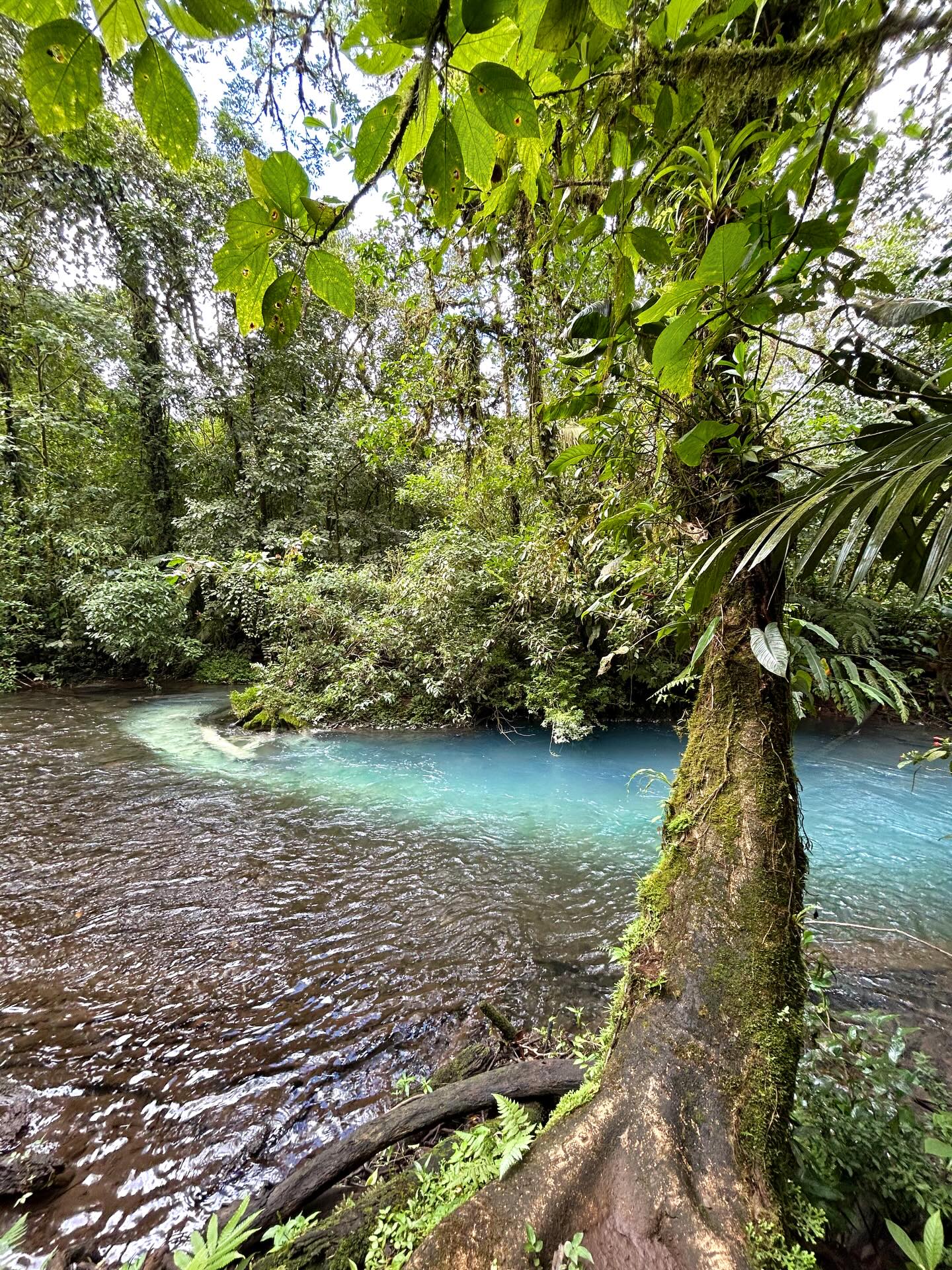
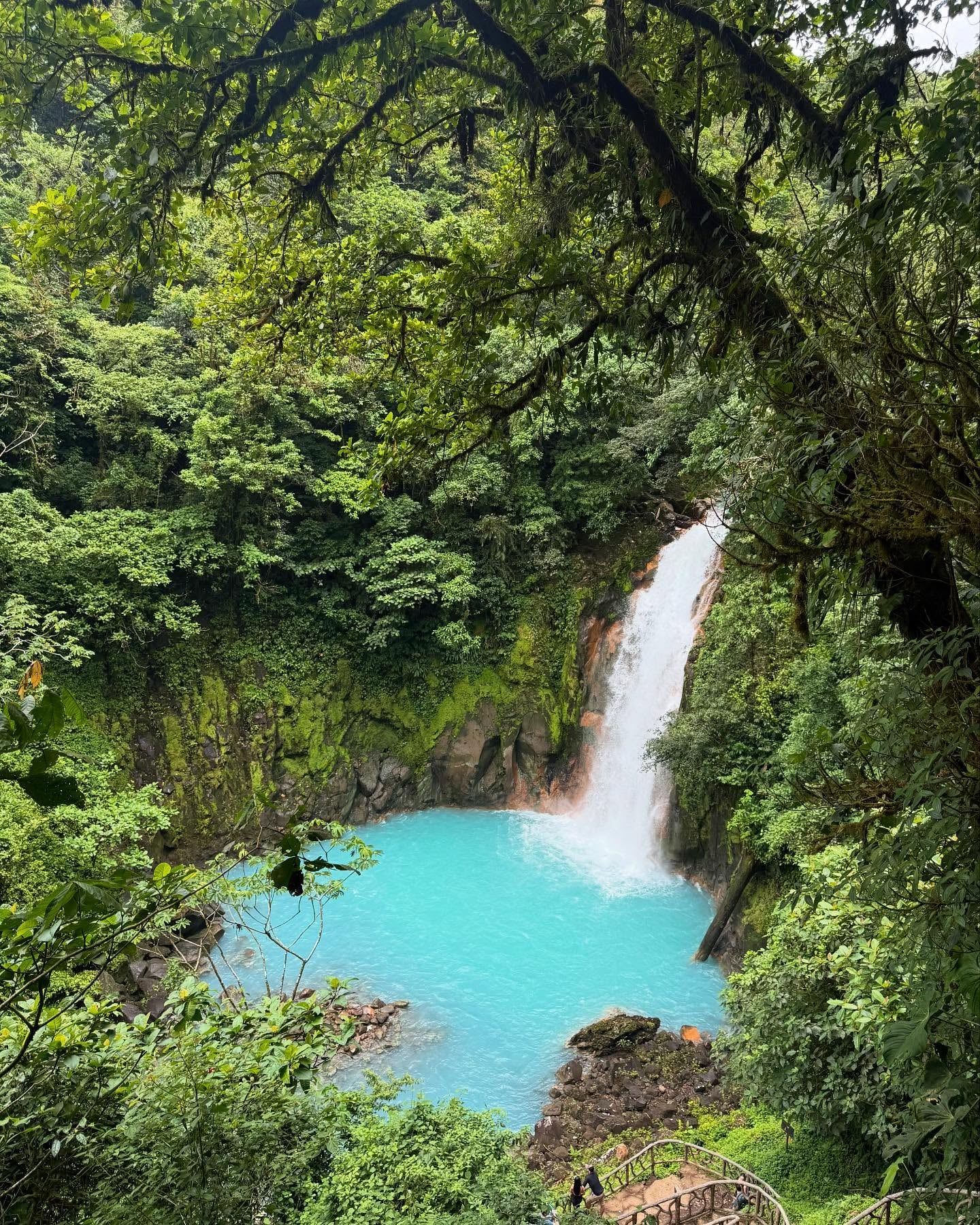
Rio Celeste spans 14 kilometers, driven by the convergence of the Buenavista River and Sour Creek. This junction, known as Los Teñideros, marks the exact line where the water shifts from clear to bright blue. The Buenavista River carries aluminosilicate particles, while Sour Creek brings high acidity. When the two streams mix, the pH drops, causing the aluminosilicate particles to enlarge. These larger particles scatter sunlight through Mie scattering, reflecting only the blue spectrum back to the human eye.
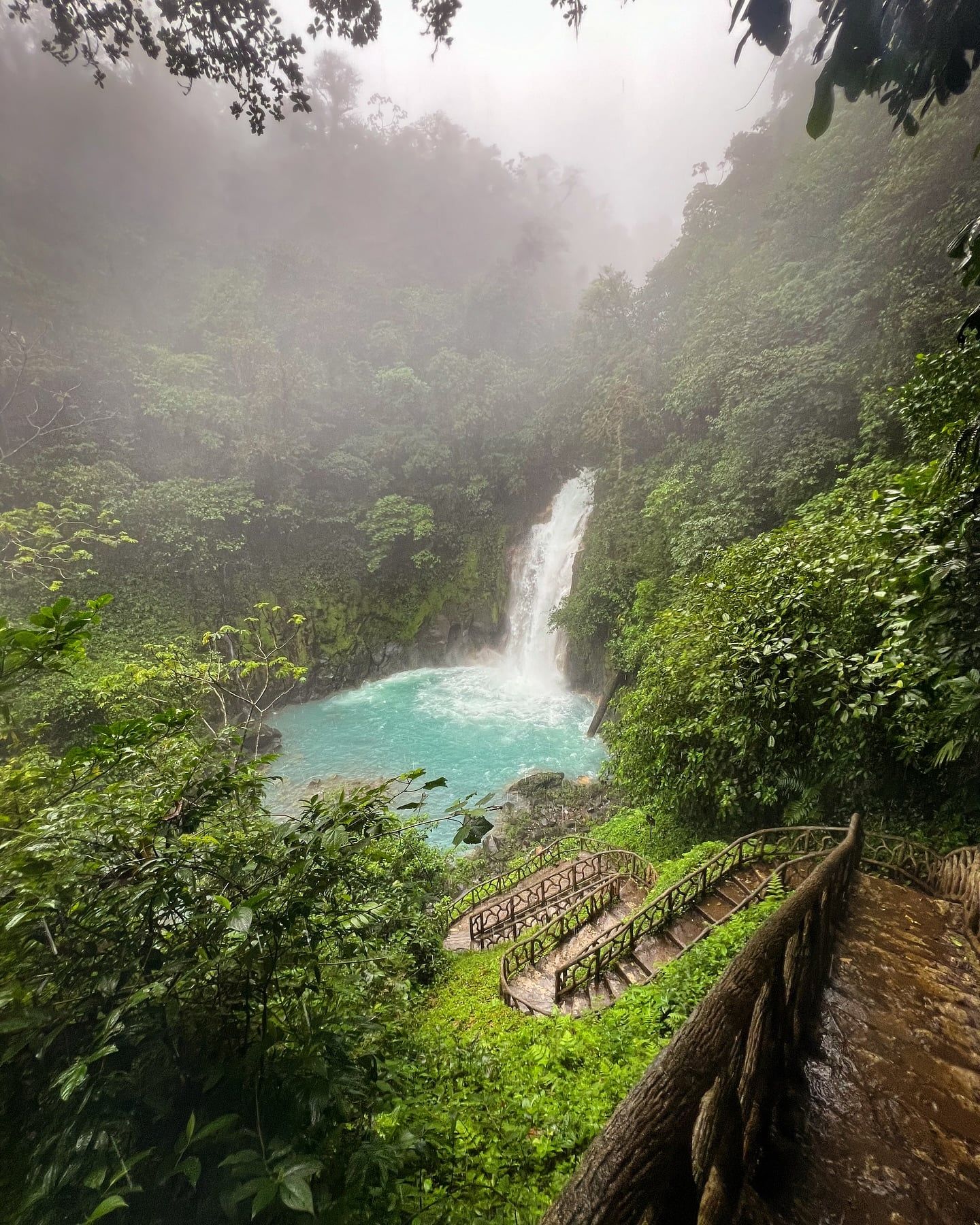
A 98-foot waterfall forms the river's most prominent geological drop. The water plunges over a sheer basalt cliff into a deep circular pool. Visitors reach the viewing area by descending 250 steep concrete and dirt steps built into the canyon wall. Thick ferns and broadleaf tropical plants cling to the rock faces surrounding the plunge pool. The spray hits the viewing platform constantly, coating the wooden railings in a permanent layer of moisture. About 200 meters past the waterfall, the river widens into a deep blue lagoon framed by the overhanging rainforest canopy.
Further up the trail, the river passes through Los Borbollones. Here, underground fissures release volcanic gases directly into the stream. The water boils violently at the surface, reaching temperatures of 95°C (203°F). The heavy scent of sulfur permeates the air for hundreds of meters in every direction. Hikers cross a rustic wooden suspension bridge over the blue water to reach this section. Rangers enforce a strict no-swimming policy across the entire park to prevent severe burns and protect the delicate mineral suspension. Visitors looking to swim must drive one kilometer past the park entrance to a free public access point near the bridge.
The Maleku people consider the Tenorio Volcano and Rio Celeste their spiritual "big house." Before the expansion of modern agriculture and national park boundaries, Maleku territory covered a vast portion of the northern plains. The river served as a physical and spiritual boundary line. According to Maleku mythology, the supreme deities washed their paintbrushes in the river after painting the sky, leaving the water permanently stained blue.
Today, the river remains a symbol of Costa Rican conservation. The decision to ban swimming entirely inside the park reflects a national shift toward prioritizing ecological health over tourist recreation. Local communities in Bijagua rely heavily on the river's preservation. Small businesses, private shuttle operators, and eco-lodges operate on the premise that the water remains pristine. Nearby reserves like Tapir Valley dedicate their resources to protecting the surrounding jungle corridors. If agricultural runoff or sediment from deforestation alters the pH balance, the Mie scattering effect stops, and the river turns clear. The local economy depends entirely on maintaining the exact mineral composition of the water.
Scoop the river water into a glass, and the bright blue color vanishes instantly.
The Buenavista River and Sour Creek merge at Los Teñideros to trigger the optical effect.
Volcanic vents at Los Borbollones heat the river to near-boiling temperatures.
Park rangers confiscate drones at the entrance to protect the rainforest canopy and wildlife.
Hikers must descend a steep, 250-step concrete staircase to view the 98-foot waterfall.
The park protects the endangered Baird's tapir, the largest native land mammal in Central America.
SINAC requires all visitors to purchase entry permits online for a specific 40-minute window.
The color comes from an optical phenomenon called Mie scattering. Suspended minerals containing aluminum, silicon, and oxygen reflect sunlight, creating the illusion of bright turquoise water.
Swimming is strictly prohibited inside Tenorio Volcano National Park to protect the mineral balance and prevent burns from volcanic vents. You can swim legally at a free public pool located one kilometer past the park entrance.
The main 3.7-mile out-and-back trail takes approximately three hours to complete. If you only hike to the waterfall and back, the trip takes about one hour.
Yes. No walk-up tickets are sold at the park entrance. You must purchase permits through the official SINAC website and select a 40-minute entry window.
Tenorio Volcano National Park opens daily at 8:00 AM and closes at 4:00 PM. Rangers enforce a strict final entry time of 2:00 PM.
Non-resident adults pay $12 USD, and children ages 2 to 12 pay $5 USD, plus tax. Costa Rican citizens and residents pay 800 colones per adult.
A 4x4 is not strictly required because the main road from La Fortuna through Bijagua is fully paved. A high-clearance vehicle helps if you plan to explore secondary gravel roads in the area.
Rangers prohibit single-use plastic bottles, plastic ponchos, cigarettes, alcohol, food, knives, and drones. Bag checks occur at the entrance gate.
Sturdy, closed-toe shoes like hiking boots or trail runners are mandatory. Park rangers will deny entry to anyone wearing sandals or flip-flops.
October and November bring heavy seasonal rains that wash sediment into the river. This runoff frequently turns the blue water a muddy brown and makes the trails extremely slippery.
Browse verified tours with free cancellation and instant confirmation.
Find Tours